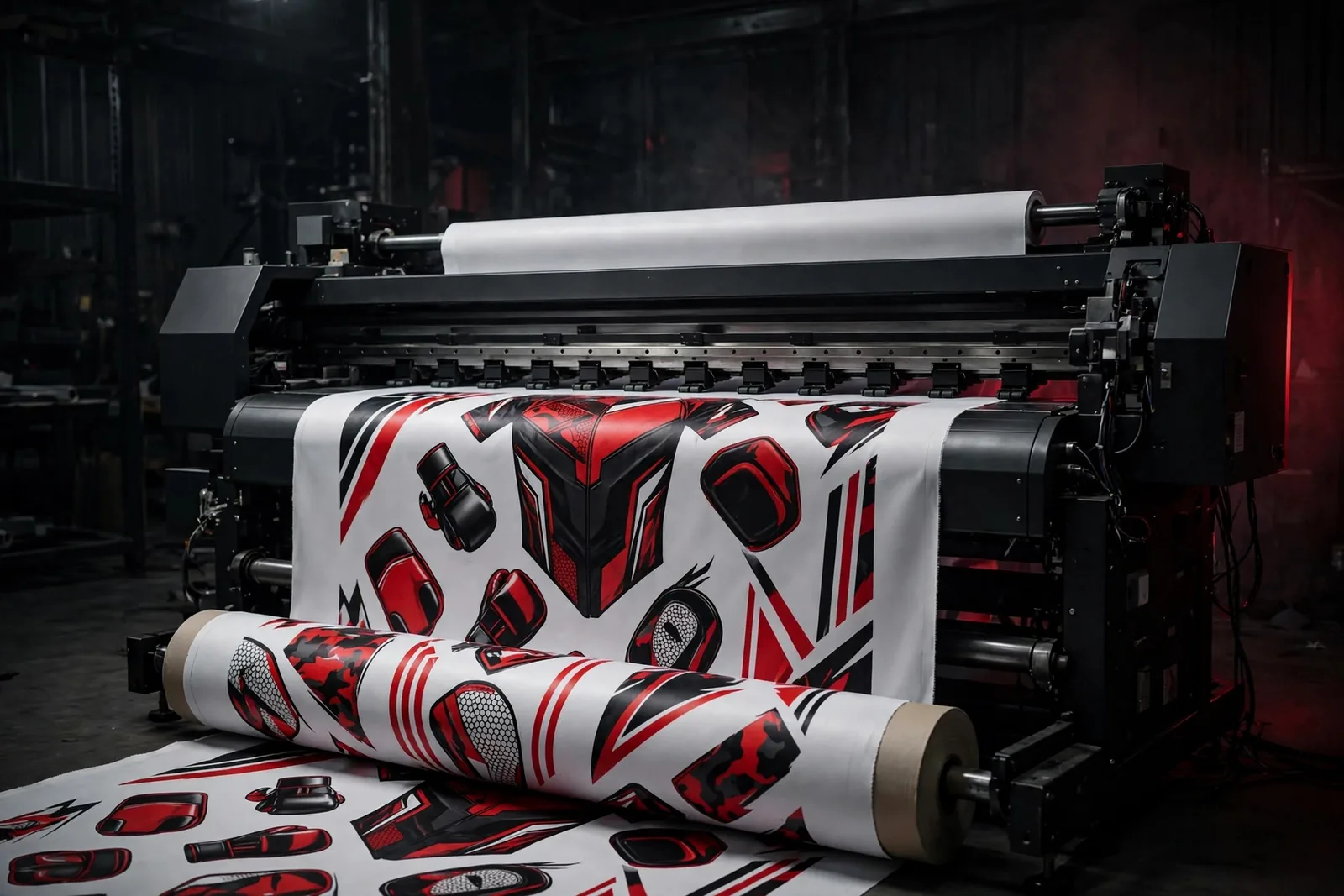
Sublimation printing is the technology behind the bold, all-over designs on rash guards, fight shorts and compression wear. Unlike surface prints that sit on top of the cloth, sublimation places the design inside the fabric itself. This guide explains how it works, why it suits combat sports and what buyers should know when preparing artwork.
What Sublimation Printing Is
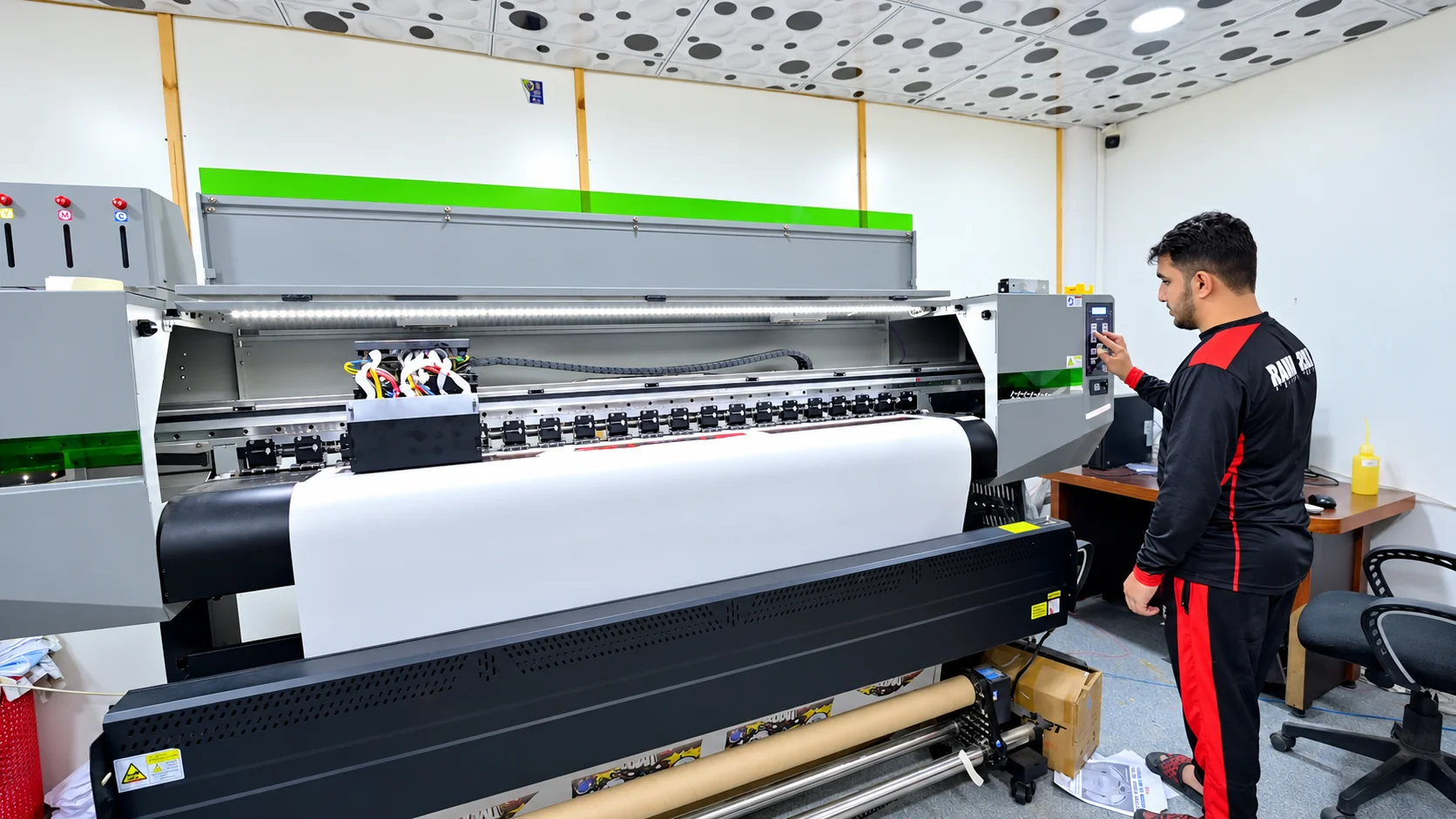
Sublimation is a dye transfer process. A design is first printed with special dye inks onto coated transfer paper, then applied to fabric with heat and pressure. Under those conditions the dye converts to gas and bonds with the fibres.
Because the colour becomes part of the material rather than a layer on top, the printed area feels identical to unprinted fabric — there is no texture or rubbery film.
The Science: From Solid Ink to Gas
The name describes the physics: sublimation is the transition directly from solid to gas without becoming liquid. The dye particles, heated to high temperature, turn to vapour and penetrate the polymer structure of the fabric.
As the fabric cools, the polymer closes and traps the dye permanently. This molecular bond is why sublimated designs resist washing out, cracking and peeling in ways that surface prints cannot match.
Why Polyester Is Essential
The process only works on polyester or high-polyester blends. The dye bonds specifically with polyester polymer; on cotton it has nothing to attach to and washes away. This is why rash guards and fight shorts — already polyester-based for stretch and moisture control — are natural candidates.
Blends with lower polyester content produce a faded, vintage look because only part of the fibre accepts dye. Designers sometimes use this deliberately, but buyers expecting vivid colour should specify high-polyester fabrics, as used across sublimation-ready performance ranges.
The Printing Process Step by Step
Production follows a consistent sequence from screen to garment:
- Artwork is finalised digitally at full garment size and correct resolution
- The design is printed in mirror image onto transfer paper with dye inks
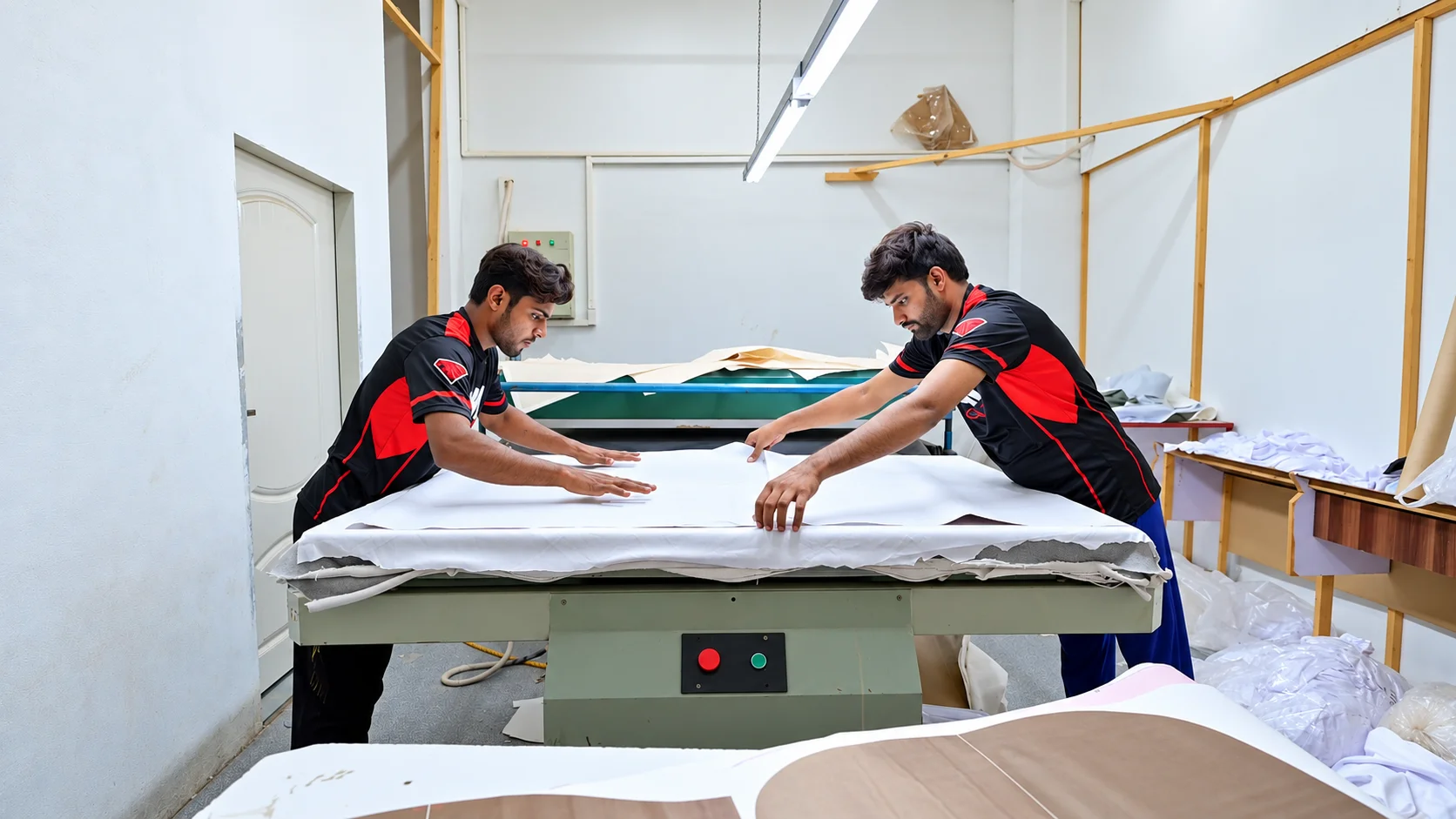
- Fabric panels are cut to pattern pieces
- Each panel is aligned with its transfer sheet in a heat press
- Heat and pressure are applied for a set time, transferring the dye
- Printed panels are inspected, then sewn into finished garments
Printing panels before sewing — rather than finished garments — is what allows designs to wrap seamlessly across seams.
All-Over Design Freedom
Because every panel is printed individually, artwork can cover the entire garment: gradients, photographs, patterns and text can flow across the chest, sleeves, back and legs without interruption.
This freedom suits fightwear design, where teams and brands want distinctive identities. Artwork across joints and seams still needs alignment planning so the design reads correctly on the body.
Durability: No Cracking or Peeling
Surface prints fail predictably: screen prints crack when stretched, vinyl transfers peel at the edges, and both degrade with friction and washing. Combat sports accelerate this through grappling, mat contact and frequent laundering.
Sublimated colour cannot crack or peel because there is no surface layer to fail. A rash guard printed this way keeps its appearance for the life of the fabric, which is why the method dominates no-gi grappling apparel.
Colour Accuracy and Pantone Matching
Digital printing works in CMYK, while brand guidelines usually specify Pantone colours. Skilled print operators convert and proof carefully, printing colour charts on the actual production fabric to compare against references.
Buyers should always approve a physical strike-off rather than a screen image: monitors vary, and fabric texture changes how colour reads. At FORM FIGHT in Sialkot, print approval on the real fabric is treated as a required step before any bulk sublimation run.
Sublimation vs Screen Printing
Screen printing pushes ink through mesh screens onto the fabric surface. It suits simple logos in large quantities and works on cotton, but each colour needs its own screen and the print sits on top of the cloth.
Sublimation handles unlimited colours and photographic detail in one pass, with no per-colour setup, but is limited to polyester. Many brands combine both methods across a range — sublimation for statement pieces, screen print for basic cotton items.
Sublimation vs Heat Transfer and Embroidery
Heat transfer vinyl applies a cut film to the surface; it is sharp for names and numbers but adds a layer that can crack over time. Embroidery stitches thread into fabric and suits logos on jackets, gis and caps, but cannot reproduce gradients or photographs.
Choosing between them is a question of garment and artwork. Factories offering several customisation and branding capabilities can advise which method fits each product in a mixed order.
Design Files and Resolution
Artwork should be supplied at actual print size with sufficient resolution — low-resolution files that look acceptable on screen will appear soft when printed across a full garment panel. Vector files are ideal for logos and graphics because they scale without quality loss.
Designers should build in bleed around panel edges and keep critical text and logos away from seam lines, where a small cutting shift could clip the artwork.
Common Mistakes to Avoid
Frequent problems include expecting vivid sublimation on cotton-rich fabric, approving colours from a phone screen, forgetting that white cannot be printed (the fabric base shows through), and placing detailed artwork across seam areas.
Another is skipping the strike-off to save time. A proof panel costs little; reprinting a bulk order costs a great deal. Careful preparation is the cheapest quality control available.
Conclusion
Sublimation printing works because the design becomes part of the fabric itself, delivering unlimited colour, full-panel coverage and durability that surface methods cannot equal on polyester fightwear. Understanding the science, the fabric requirement and the approval process helps buyers brief designs that print exactly as imagined.
Brands developing printed fightwear can discuss artwork, fabrics and sampling with FORM FIGHT via the request a quote page before committing to production.
FAQs
Can sublimation printing be used on cotton?
No — the dye bonds only with polyester, so cotton garments cannot hold a sublimation print and require methods such as screen printing instead.
Does sublimation printing fade over time?
Properly sublimated polyester is highly wash-fast and fade-resistant because the dye is locked inside the fibre rather than sitting on the surface.
Why is white never printed in sublimation?
Sublimation inks are translucent, so white areas of a design are simply the white fabric showing through where no dye is applied.
What file format is best for sublimation artwork?
Vector files such as AI, EPS or PDF are ideal for graphics and logos, while raster artwork should be supplied at full size and high resolution.