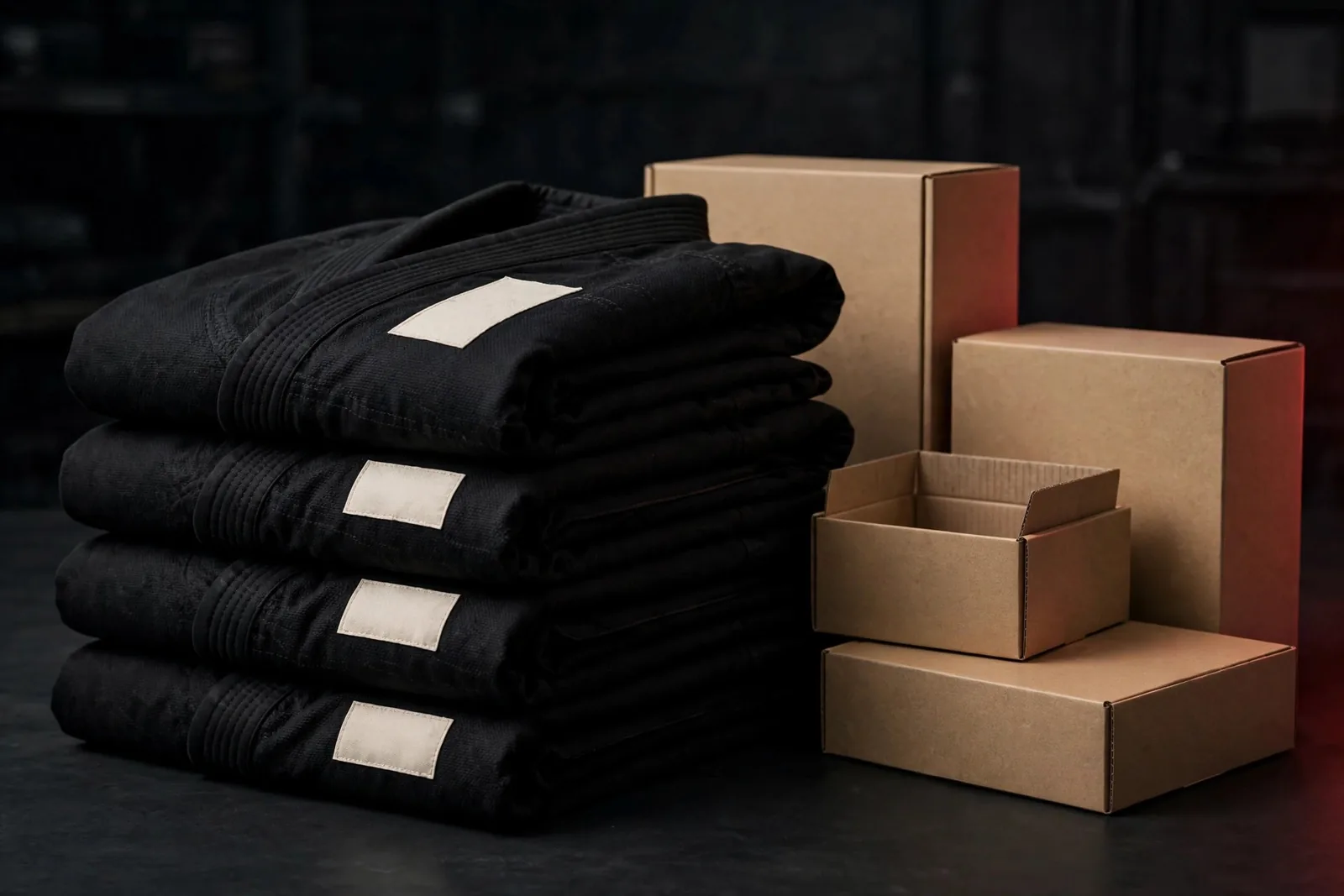
Private label fight gear lets you sell professionally branded products without building your own factory. You choose the products, colours and branding, while an experienced manufacturer handles patterns, materials, production and packing. This guide explains how labels, logos and packaging work together to make stock products feel like your own brand.
What Private Label Actually Means
Private label production starts with proven product styles that are customised with your branding. Unlike fully custom development, you are not designing every panel from scratch, so the route is usually faster and simpler to manage.
It suits new brands testing demand and established brands adding categories. FORM FIGHT supports this model through its OEM and private label capability for fightwear, fightgear, uniforms and performance apparel.
Choose Products That Fit Your Brand
Start with items your audience already buys: training essentials, uniforms or protective basics. A focused launch range keeps colours, sizes and stock levels manageable while you learn what sells.
Match product quality to your brand position. Budget, mid-range and premium lines need different fabrics and finishing, so decide your level before branding decisions are made.
Your Logo Is the Foundation
Supply your logo as clean vector artwork wherever possible, with clear rules for size, placement and colour. Consistent logo use across garments, labels and packaging is what turns separate products into a recognisable range.
Decide early where the logo appears: chest, leg, back, waistband or sleeve. Placement affects pattern layout and cost, so lock it during sampling rather than after production starts.
Main Labels and Neck Prints
The main label is the most visible brand marker inside the garment. Woven neck labels feel premium and durable, while printed neck labels sit flat and suit performance fabrics that need a smooth finish against the skin.
Both options carry your logo and often the size. Whichever you choose, keep artwork simple at small sizes so text stays readable after washing and wear.
Woven Labels and Side Tabs
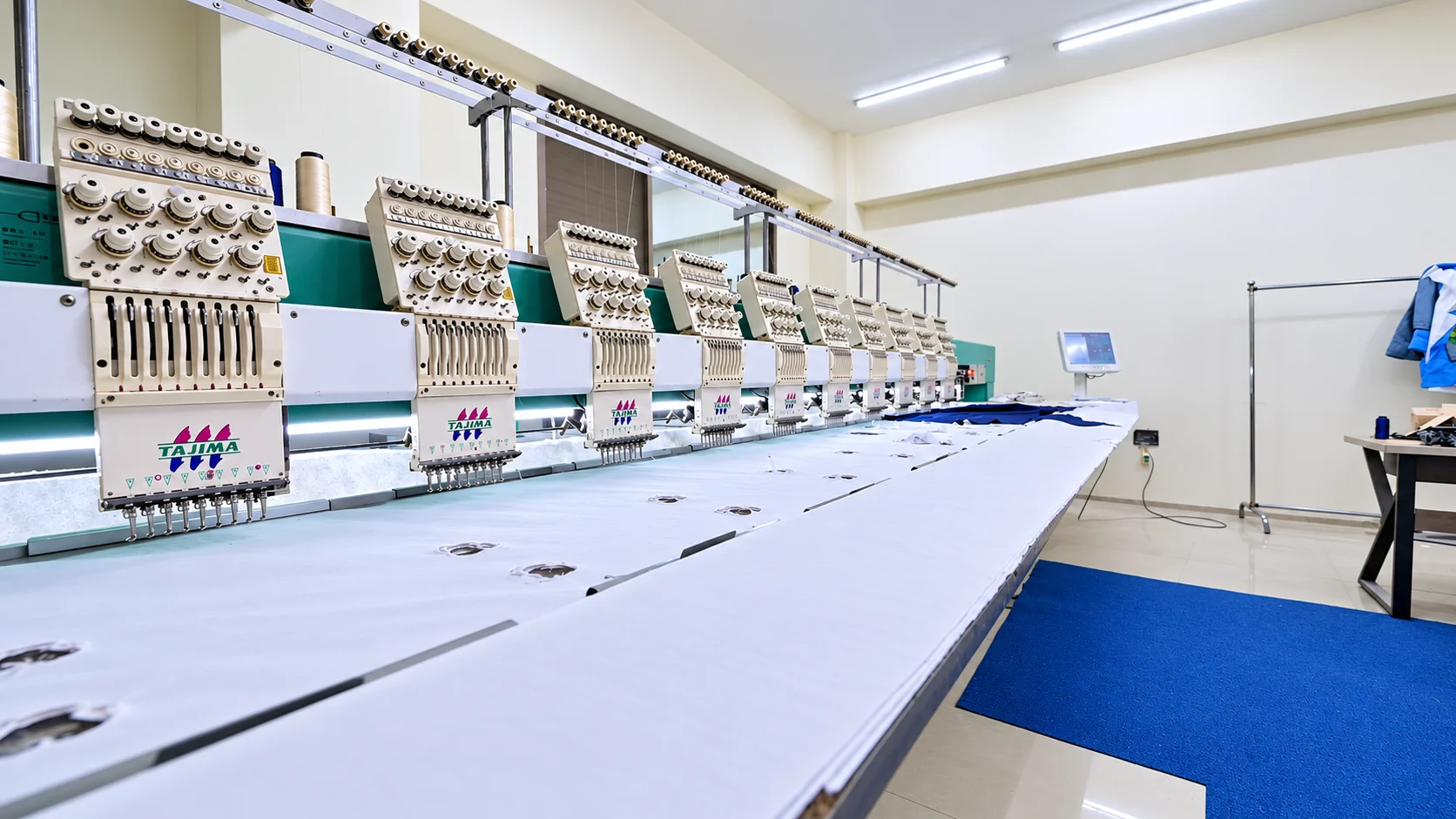
Small woven tab labels on hems, sleeves or waistbands add a retail finish that customers notice. They work well on fightwear and uniforms where a large chest logo may not be appropriate for every style.
Tabs are also an easy way to create a family look across different products. Using the same tab design across a range ties fightwear, gear and apparel together on the shelf.
Care and Size Labels
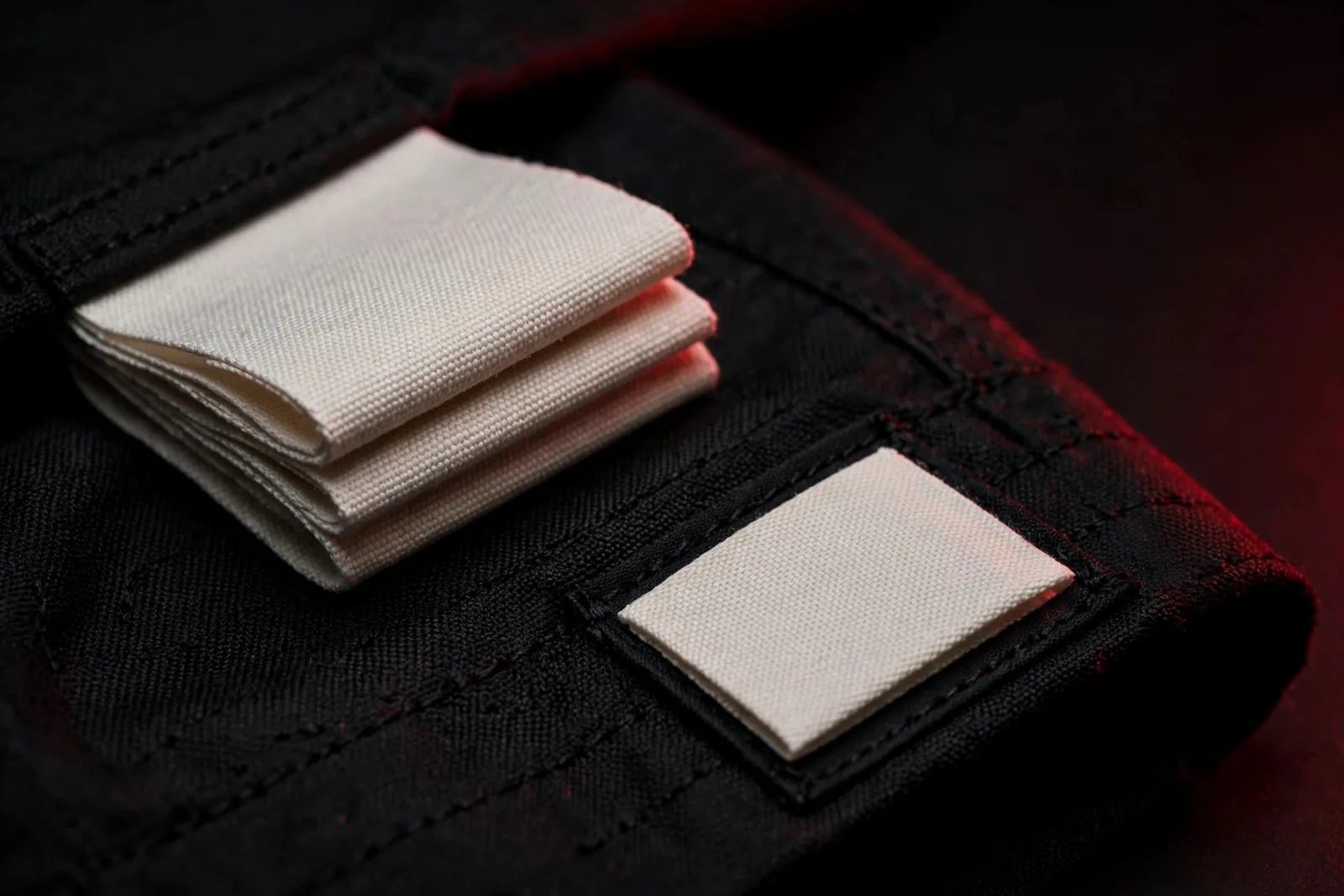
Care labels carry washing instructions, fabric composition and size information required in many markets. They are a legal and practical detail, not just branding, so accuracy matters.
Agree the wording with your manufacturer before printing. If you sell in multiple regions, check whether your target markets need specific symbols, languages or fibre content formats.
Hang Tags That Sell Your Story
Hang tags give you space for your logo, website, social handles and a short brand message. They also carry barcodes and retail pricing in many stores, making them both a branding and operations tool.
- Logo and brand colours on the front
- Product name, size and barcode
- Website and social media details
- Short care or product benefit note
- Consistent card stock and finish across the range
Keep tag design consistent with your labels and packaging so the whole product presentation feels deliberate.
Polybags and Individual Packing
Most fight gear is folded and packed individually in polybags, which protect the product and present it cleanly. Bags can be plain, printed with your logo, or paired with an insert card for a more premium unboxing.
Discuss bag thickness, warnings required in your market and how products are folded. In Sialkot, export factories pack for long-distance shipping daily, so ask what packing method best protects your specific products in transit.
Cartons and Shipping Marks
Outer cartons carry your shipping marks: brand name, product, sizes, quantities and carton numbers. Clear marks speed up warehouse receiving and reduce mistakes when you hold stock in several sizes.
Agree carton packing rules during sampling: pieces per carton, size ratios and whether cartons can be mixed. These details are dull but they prevent expensive confusion on delivery day.
Colour Consistency Across Branding
Your brand colour will appear in fabric, thread, print ink, labels and tags, and each material renders colour slightly differently. Approve physical swatches and label samples together so everything matches under the same light.
FORM FIGHT recommends approving a complete branded sample, not just the garment, before bulk production. One full presentation sample becomes the reference for every branding element in the order.
Protect Your Brand Assets
Share artwork through one controlled channel and confirm who may use it. Your logo files, label designs and packaging artwork are brand assets and should only be used for your confirmed orders.
Keep your own copies of final artwork and approvals. If you ever move production, a complete brand pack lets a new factory reproduce your labels and packaging accurately. Our capabilities overview explains how branding fits into the wider production process.
Conclusion
Private label fight gear succeeds when the branding system is planned as a whole. Labels, logos, tags, bags and cartons should share one design language so customers recognise your products instantly, whichever category they buy.
Start with a focused range, approve one complete branded sample and document every element. That groundwork makes reorders simple and helps your brand look established from the very first launch.
FAQs
What is the difference between private label and OEM?
Private label brands existing product styles as your own, while OEM production manufactures products to your fuller design specification.
Which label type is best for fight gear?
Woven labels suit most garments for durability, while printed neck labels work better on smooth performance fabrics.
Can packaging carry my logo as well?
Yes, polybags, hang tags, insert cards and shipping cartons can all be branded for a consistent presentation.
Do I need vector artwork for private labelling?
Vector files give the cleanest results for logos, woven labels and print, so supply them whenever possible.