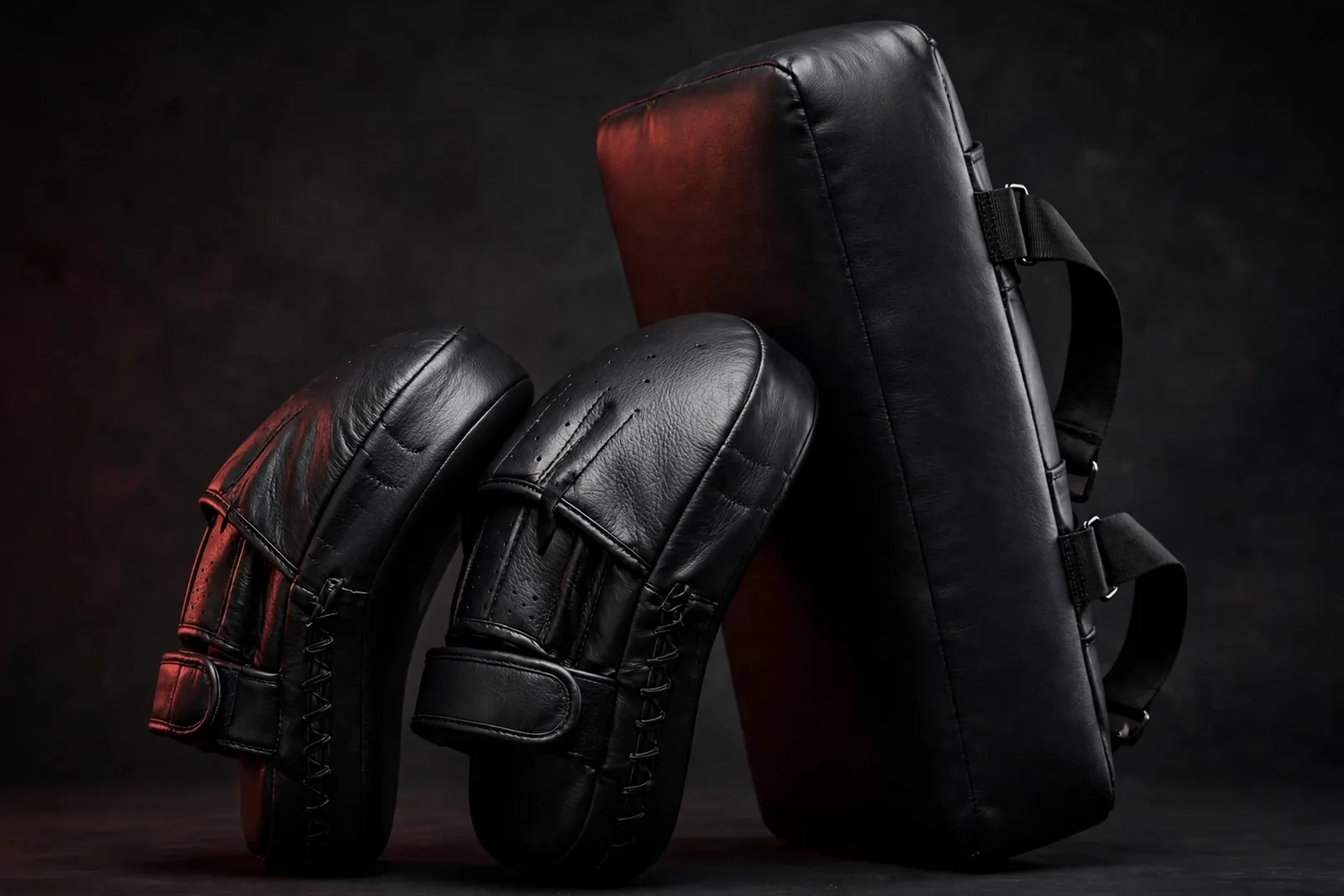
Focus mitts and Thai pads are the striking coach’s hardest-working tools, absorbing thousands of punches, elbows, knees and kicks across a single week of training. Because they take constant impact while protecting the holder’s hands, wrists and forearms, their construction matters far more than their appearance. This guide explains how layered foam, pad shapes and finishing details decide how long a pair performs in the gym.
The Role of Striking Pads in Training
Focus mitts are smaller, hand-held targets used mainly for boxing combinations, speed work and accuracy drills. Thai pads are larger and thicker, strapped to the coach’s forearms so fighters can throw full-power kicks, knees and elbows safely.
Both spread impact over a wide area and return enough feedback for the striker to judge distance and power; poorly built pads go soft in the centre or split along the edges.
Foam Layer Construction: Why Stacking Matters
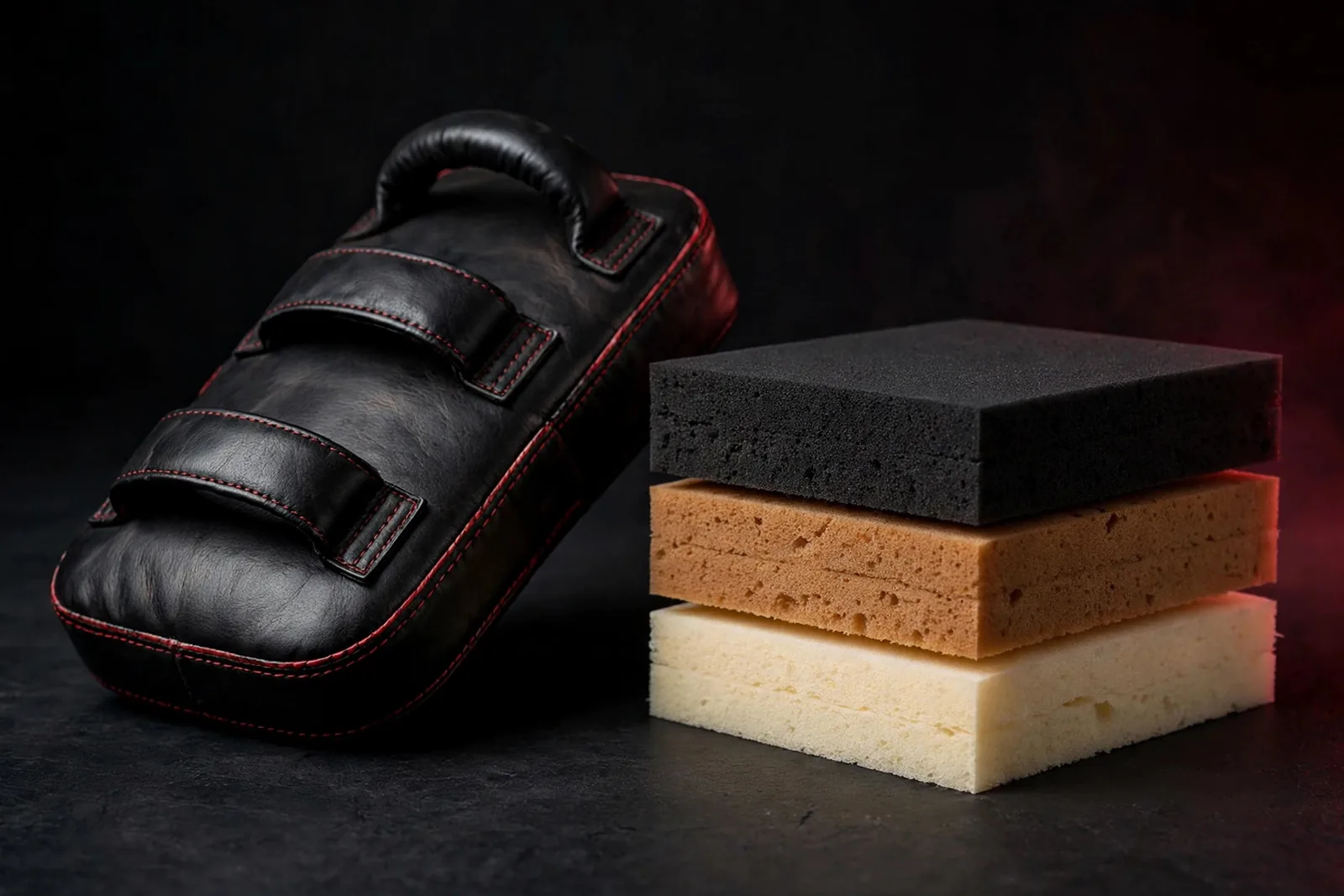
Quality pads rarely use a single foam block; manufacturers stack two or three layers of different densities, each performing a separate task during impact.
A firmer outer layer spreads the force of the strike, a softer middle layer absorbs energy, and a denser inner layer protects the holder’s arm. This layered approach, used across professional striking pads and training gear, keeps the hitting surface stable far longer than single-foam designs.
Foam Densities and Impact Absorption
Foam density is measured by how much force it takes to compress the material. High-density foam feels firm and resists bottoming out, while low-density foam feels soft but can compress completely under hard kicks, transferring shock to the holder.
The right balance depends on the discipline. Boxing mitts favour medium densities for fast, snappy feedback, whereas Thai pads need higher density overall to handle shin and knee strikes without the holder feeling every impact.
Focus Mitt Shapes: Flat, Curved and Concave
Flat mitts are the traditional choice and suit general pad work. Curved mitts are pre-shaped to cup the striker’s fist, which centres punches naturally and reduces wrist strain for the holder during long sessions.
Concave or air-channel designs add a recessed target area that deepens the pocket for the fist. Each shape changes how combinations feel, so brands usually offer curved mitts as their main line and flat mitts as an entry option.
Thai Pad Shapes and Coverage
Thai pads come in flat and curved profiles. A curved profile wraps slightly around the forearm and catches roundhouse kicks on a broader surface, while flat pads present a firm, predictable target for drilling technique.
Length matters too: longer pads protect more of the forearm against low kicks, while compact pads are lighter for fast combination work.
Handles, Straps and Grip Systems
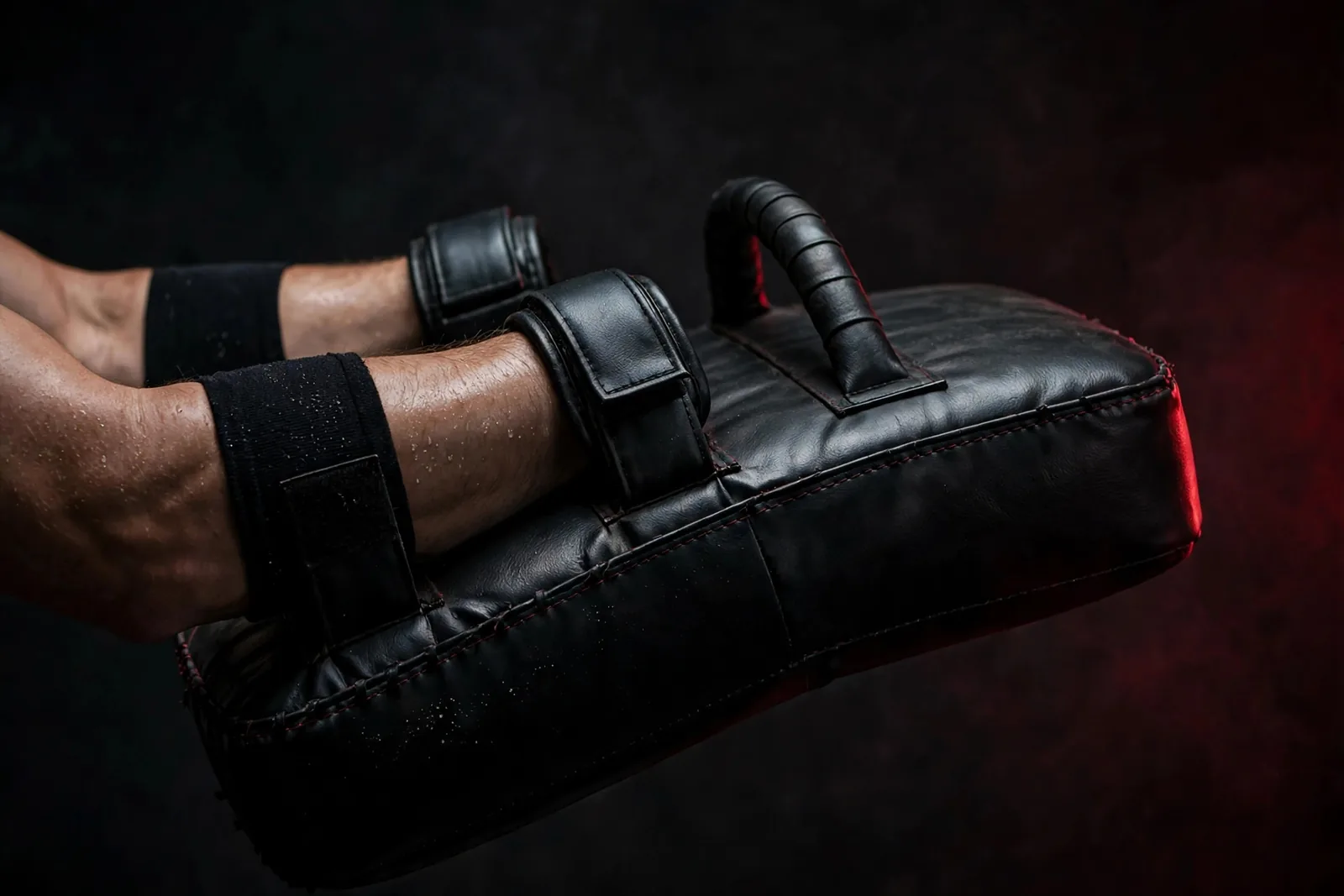
A pad is only as good as its hold. Focus mitts use a glove-style hand compartment, sometimes with a wrist strap, while Thai pads rely on two forearm straps plus a top handle for control.
- Riveted or reinforced strap anchors that resist tearing under repeated kicks
- Hook-and-loop closures wide enough to adjust over wraps or bare arms
- Padded handles that keep the holder’s grip secure during sweaty sessions
- Mesh or ventilation panels on mitt backs to reduce heat build-up
Weak strap stitching is the most common early failure on cheap pads, which is why anchor points deserve close inspection on any sample.
Outer Materials: Leather and Synthetic Options
Genuine leather remains the benchmark for durability, resisting abrasion from gloves and shins while ageing slowly. High-grade synthetic leather and engineered microfibres close much of the gap at a lower cost, and they handle sweat and cleaning better than basic vinyl.
At FORM FIGHT in Sialkot, pad covers are cut and stitched to match the foam core precisely, because loose covers wrinkle, shift under impact and wear through at the folds first.
Stitching, Piping and Edge Finishing
Edges take constant friction from gloves, wraps and floors, so double stitching, reinforced perimeter piping and covered zip or lace closures all extend working life.
Laced pads allow the foam to be replaced or re-packed, a feature serious gyms value. Zippered designs are quicker to open but need strong sliders that will not burst under compression.
Durability Checks Before Bulk Orders
Buyers can test samples in a single session. Strike the pad repeatedly in one spot and check whether the surface rebounds or stays dented. Flex the straps, pull the handle anchors and inspect whether stitches stretch open.
Weight is another clue: unusually light pads usually rely on low-density foam throughout, which shortens their life under daily gym use.
Care, Cleaning and Storage
Sweat is the main enemy of pad foam and covers. Wiping pads down after sessions, airing them away from direct sunlight and storing them flat rather than crushed under other kit slows material breakdown considerably.
Leather covers benefit from occasional conditioning; synthetic covers need only a damp cloth and mild soap. Never leave pads sealed in a kit bag overnight, where trapped moisture degrades foam fastest.
Custom Options for Brands and Gyms
Most gyms and labels order pads with printed or embossed logos, team colours and matched mitt-and-pad sets. Because pads feature in training photos and videos, clean strike-surface branding has real marketing value for academies.
Brands developing a full striking range can review construction options through the manufacturing process and align pad specifications with the gloves and wraps in their line.
Conclusion
Focus mitts and Thai pads succeed or fail on what sits inside the cover: layered foams of the right densities, a shape matched to the discipline and strap systems built to survive daily impact. Surface materials and stitching then decide how long that performance lasts.
Brands and gyms developing their own striking pads can discuss foam stacks, shapes and branding with FORM FIGHT through the quote request page.
FAQs
What is the difference between focus mitts and Thai pads?
Focus mitts are small hand-held targets for boxing combinations, while Thai pads are larger forearm-strapped pads built to absorb kicks, knees and elbows.
Why do quality pads use multiple foam layers?
Layered foams of different densities spread impact, absorb energy and protect the holder’s arm better than a single foam block, which wears out faster.
Are leather pads better than synthetic pads?
Leather generally lasts longest under heavy use, but quality synthetic covers perform well, resist sweat damage and suit buyers working to a tighter budget.
How long should a good pair of Thai pads last?
With daily gym use and basic care, well-built Thai pads should hold their shape and firmness through many months of regular striking sessions.