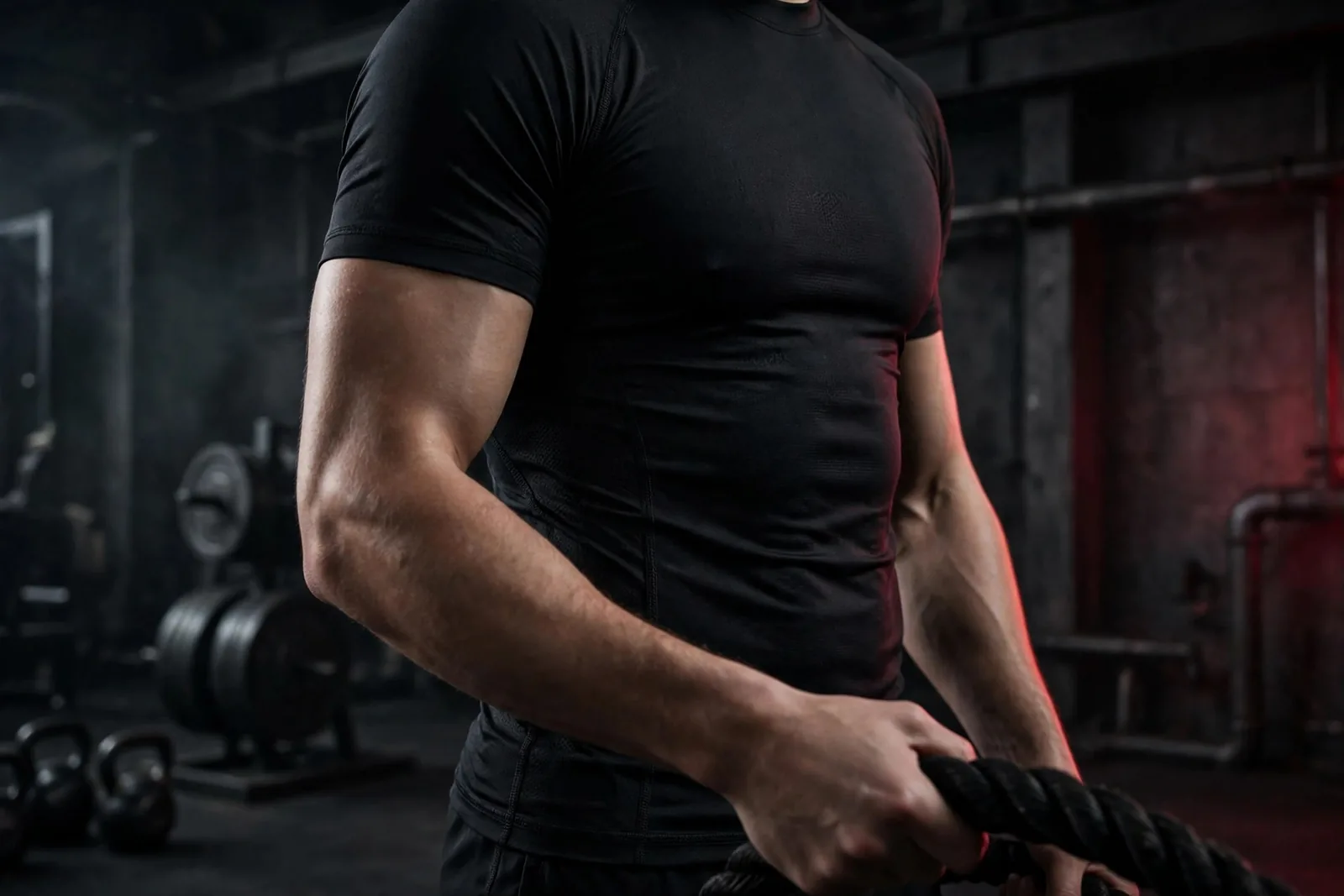
Base layers for combat sports are the garments worn closest to the skin beneath shorts, uniforms and protective gear. Their work is invisible but constant: move sweat away from the body, regulate temperature, reduce friction and keep athletes comfortable through warm-ups, drills and hard rounds. This guide explains how base layers perform those jobs and how to choose them.
What a Base Layer Does
A base layer has three functions. It manages moisture so sweat does not sit on the skin, it helps control temperature in both cold gyms and heated competition halls, and it provides a smooth interface between skin and outer garments.
In combat sports the layer also protects the skin itself — covering the torso and limbs reduces direct mat contact, which is why the rash guard, originally a base layer, became essential equipment in grappling.
Moisture Wicking: Moving Sweat Outward
Wicking fabrics pull liquid sweat from the skin surface and spread it across the outer face of the fabric, where a larger area allows faster evaporation. This is achieved through fibre shape, yarn engineering and knit construction rather than absorption.
Cotton does the opposite — it absorbs and holds moisture, becoming heavy and cold. That is why technical base layers are built from polyester or nylon, as seen in performance apparel ranges designed for high-sweat training.
Temperature Control in Training
Evaporating sweat cools the body during intense work, so efficient wicking prevents overheating in summer and competition environments. In cold conditions the same layer prevents sweat from chilling the skin during rest periods between rounds.
Fabric weight tunes this balance: lightweight layers maximise cooling, while brushed or heavier knits trap a thin layer of warm air for winter training. Many athletes keep both weights in rotation across the year.
Fabric Choices: Synthetics and Blends
Polyester is the workhorse of base layers — light, durable, quick-drying and good at holding prints and colours. Nylon offers a softer hand feel and excellent abrasion resistance for grappling-heavy use. Elastane is blended in for stretch and shape retention.
- Polyester: fast drying, durable, colourfast
- Nylon: soft feel, high abrasion resistance
- Elastane blends: stretch, recovery and close fit
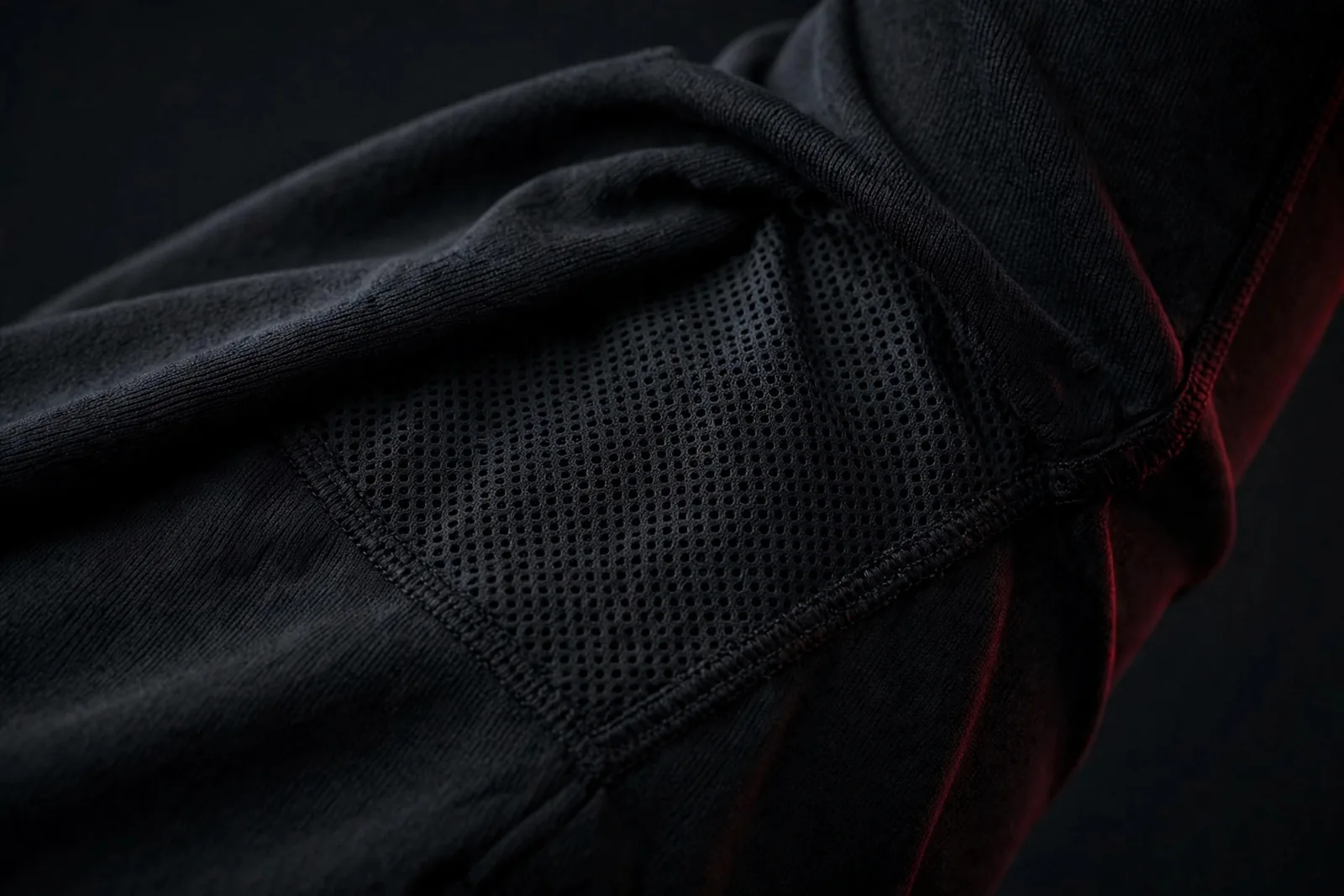
- Mesh constructions: targeted ventilation in heat zones
- Brushed knits: warmth for cold-weather sessions
Fit: Close Without Restricting
A base layer only wicks effectively when it touches the skin, so the fit should be close across the torso and limbs. Loose fabric leaves air gaps where sweat pools instead of transferring into the textile.
Close must not mean restrictive. Four-way stretch fabrics and well-planned patterns let the layer follow takedowns, kicks and groundwork without pulling at the neck or riding up at the waist.
Short Sleeve, Long Sleeve and Sleeveless
Short-sleeve layers suit warm rooms and striking sports where arm freedom and cooling matter most. Long sleeves add skin coverage for grappling, protecting forearms and elbows from mat friction and helping muscles stay warm.
Sleeveless base layers work under vests and for athletes who overheat easily. In practice, many fighters choose sleeve length by discipline: more skin contact with mats and opponents usually means longer coverage.
Rash Protection Under the Gi
Worn beneath a gi or uniform, a base layer reduces friction between coarse uniform fabric and skin, particularly at the shoulders, chest and neck where collars rub during gripping exchanges.
It also creates a hygiene barrier and keeps the uniform itself cleaner by intercepting sweat first. Several grappling federations require or recommend rash guards under the gi for exactly these reasons.
Compression vs Regular Base Layers
Regular base layers fit close for wicking but apply little pressure. Compression versions fit firmer, supporting muscles and staying locked in place during inversions and scrambles, and many athletes prefer that held feeling for hard sessions.
The choice is personal and situational. At FORM FIGHT in Sialkot, both styles are developed with the same priority: the garment must disappear during training, never distracting the athlete wearing it.
Seam Placement and Chafing
Chafing is a design problem before it is a comfort problem. Flatlock seams remove raised ridges, and thoughtful patterns route seams away from the underarm, inner thigh and other high-rub zones.
Tagless labels, smooth neck bindings and covered elastic all contribute. Small construction details like these separate base layers that athletes reach for daily from those that stay in the drawer.
Seasonal Layering Strategies
In summer, a single lightweight base layer under shorts is usually enough, with mesh panels earning their place. In winter, a heavier base layer under a uniform or hoodie keeps muscles warm during long technical sessions with intermittent effort.
Competition days add another pattern: warming up in layers, then stripping to the base layer and fight kit. Garments that are easy to change quickly, and that do not cling awkwardly when damp, earn their place in the kit bag.
Care Tips for Performance Fabrics
Technical base layers last longest with simple care: wash cold, avoid fabric softener (it coats wicking fibres and reduces performance), and air dry rather than tumble drying at high heat.
Washing promptly after training prevents odour from setting into synthetic fibres. With this routine, a quality base layer keeps its fit and wicking ability through a long service life.
Conclusion
Base layers for combat sports earn their keep through moisture management, temperature control and skin protection — functions that depend on fibre choice, fabric weight, fit and construction working together. Choosing the right specification for the discipline and season makes training measurably more comfortable.
Brands building layered training ranges can review how the garments are manufactured and plan base layer development with FORM FIGHT alongside their outerwear.
FAQs
What is the difference between a base layer and a rash guard?
A rash guard is a type of base layer designed for grappling, with a close fit, flat seams and durable fabric that protects skin from mat friction.
Should a base layer be tight?
It should fit close to the skin so wicking can work, but four-way stretch should still allow completely free movement without restriction.
Why is cotton a poor base layer?
Cotton absorbs sweat and holds it against the skin, becoming heavy, cold and slow to dry, which undermines both comfort and temperature control.
How many base layers does a fighter need?
Most athletes rotate at least two or three so a clean, dry layer is always available while others are being washed and dried.