Fight gear quality control is what separates equipment that survives years of hard training from gear that splits, flattens or fades within a season. For brands importing gloves, pads, uniforms and apparel, QC is not a single final check but a chain of inspections that starts before fabric is cut. This guide explains how materials, stitching and staged inspection keep every batch consistent.
Why QC Matters More in Fight Gear
Fight gear is safety equipment as much as apparel. A glove seam that opens in sparring or a shin guard strap that tears mid-round creates injury risk, not just a returns problem.
Small defects grow fast under repeated impact: a skipped stitch or under-filled pad section that might pass in casual clothing becomes a failure point, which is why specialised factories build inspection into every stage of the manufacturing process.
Incoming Material Inspection
Control begins when raw materials arrive. Leather hides are checked for scars, loose grain and thickness variation; fabrics are inspected for weaving faults, shade differences and weight per square metre against the approved standard.
Foams are checked for density and rebound; hook-and-loop tape, zips, laces and elastic are tested for grip and strength. Rejecting a faulty lot now is far cheaper than rejecting finished goods later.
Colour, Weight and Shrinkage Checks
Fabric lots are compared against the approved swatch under consistent lighting to catch shade drift between rolls. Sample cuts are weighed to confirm the material matches its specified weight, since lighter substitutes change both feel and durability.
Wash tests on sample panels reveal shrinkage and colour bleeding before bulk cutting, preventing the most common bulk complaints: mixed shades in one order and garments that change size after washing.
Cutting Accuracy and Pattern Control
Every panel is cut from patterns graded to the size chart. Inspectors verify cut pieces against the master pattern, because a few millimetres of error at cutting become twisted seams and uneven padding in the finished product.
Left and right components are paired and counted here, preventing mismatched sizes and shades in the same retail box.
Stitching Standards: Density and Strength
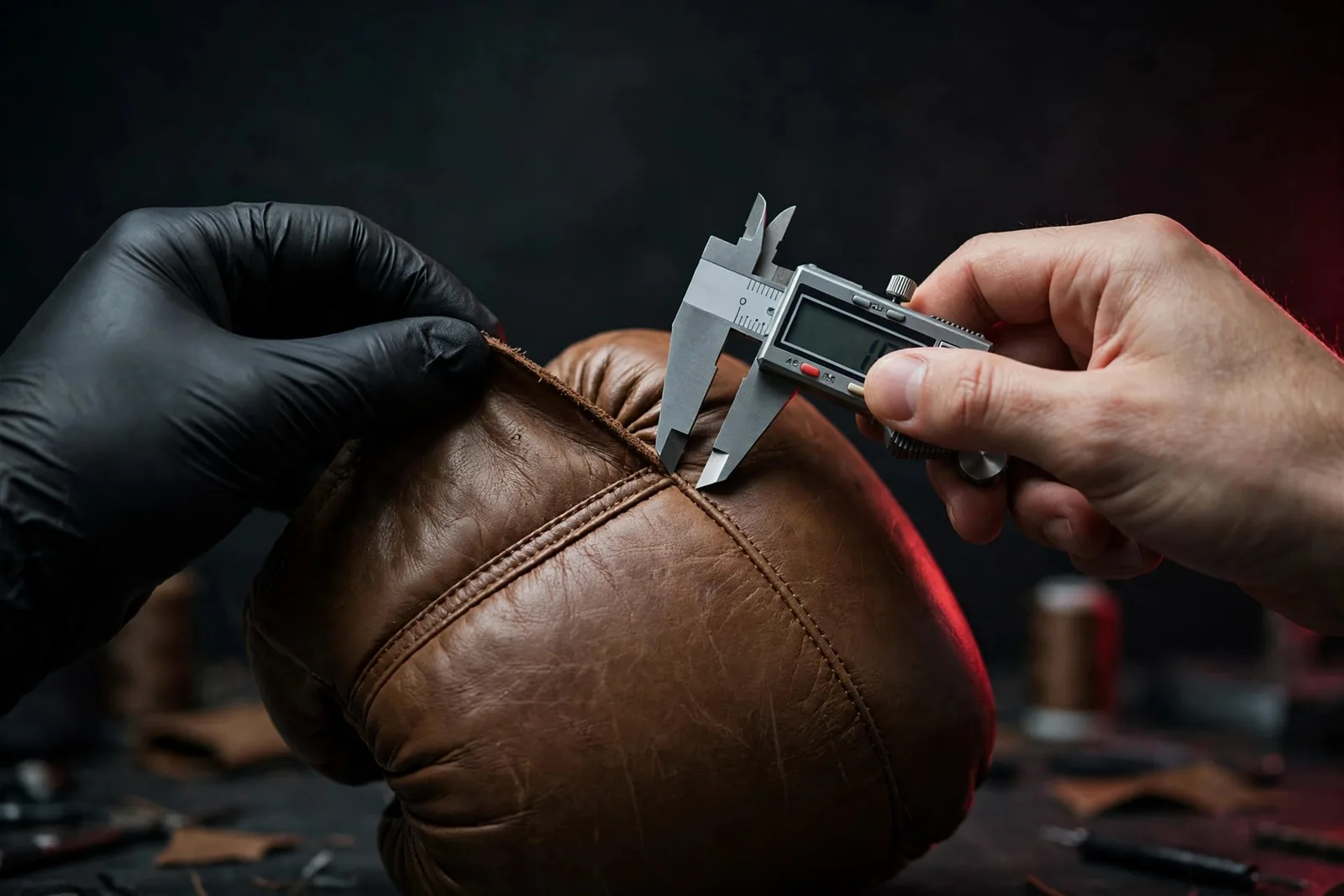
Stitch density, usually counted as stitches per inch, decides seam strength. Too few stitches and seams gap under stress; too many and the needle perforates leather or fabric until it tears along the stitch line like a stamp edge.
- Consistent stitch length with no skipped or loose stitches
- Reinforced bar-tack stitching at strap anchors and stress points
- Matched thread weight and colour, with trimmed, sealed thread ends
- Even seam allowances so panels sit flat without puckering
- Double stitching on high-load seams such as glove cuffs and pad straps
Inspectors pull-test sample seams from each production batch to confirm they meet the agreed strength before the batch moves forward.
In-Line Inspection During Sewing
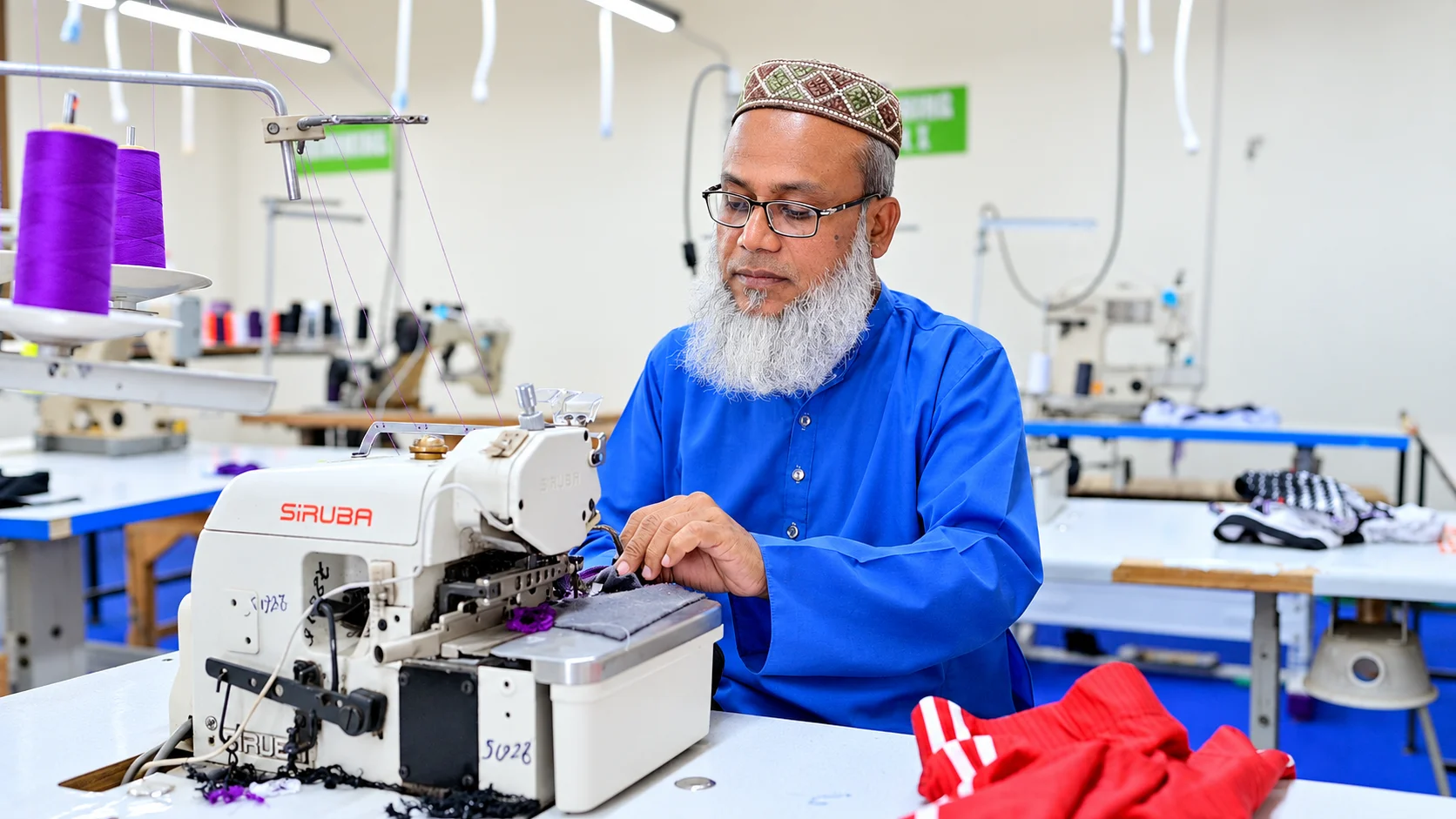
Rather than waiting until products are finished, line inspectors check work at intervals while sewing continues. Catching a drifting seam allowance or wrong thread colour on the tenth piece saves the other several hundred in the run.
In-line checks also cover padding placement: foam inserts are verified for position before linings are closed, because padding errors cannot be corrected once a product is sewn shut.
Padding and Density Consistency
Finished gloves and pads are weighed and compared against the approved sample’s weight range. A glove that is meaningfully lighter than standard usually has less foam than specified, even if it looks identical from outside.
Hand-feel checks across each batch confirm density is even from thumb to cuff and between left and right pieces, catching padding substitutions that visual checks alone would miss.
Printing, Embroidery and Branding Checks
Logos are checked for position, size, colour accuracy and adhesion. Printed designs are stretch-tested on fabric samples so artwork does not crack when the material flexes in use, an important check for sublimated apparel.
Embroidery is inspected for loose threads, puckering and backing quality. At FORM FIGHT in Sialkot, branding checks follow the buyer’s approved artwork file exactly, since a misplaced logo on a full production run cannot be undone.
Final Inspection and Acceptable Quality Levels
Before packing, finished goods undergo a final random inspection at an agreed acceptable quality level, sampling units from across the batch rather than only the top of each carton.
Defects are classified as critical, major or minor. Critical defects that affect safety fail the batch outright; major and minor defects are counted against agreed limits, and the batch is reworked or re-inspected if it exceeds them.
Packaging and Pre-Shipment Checks
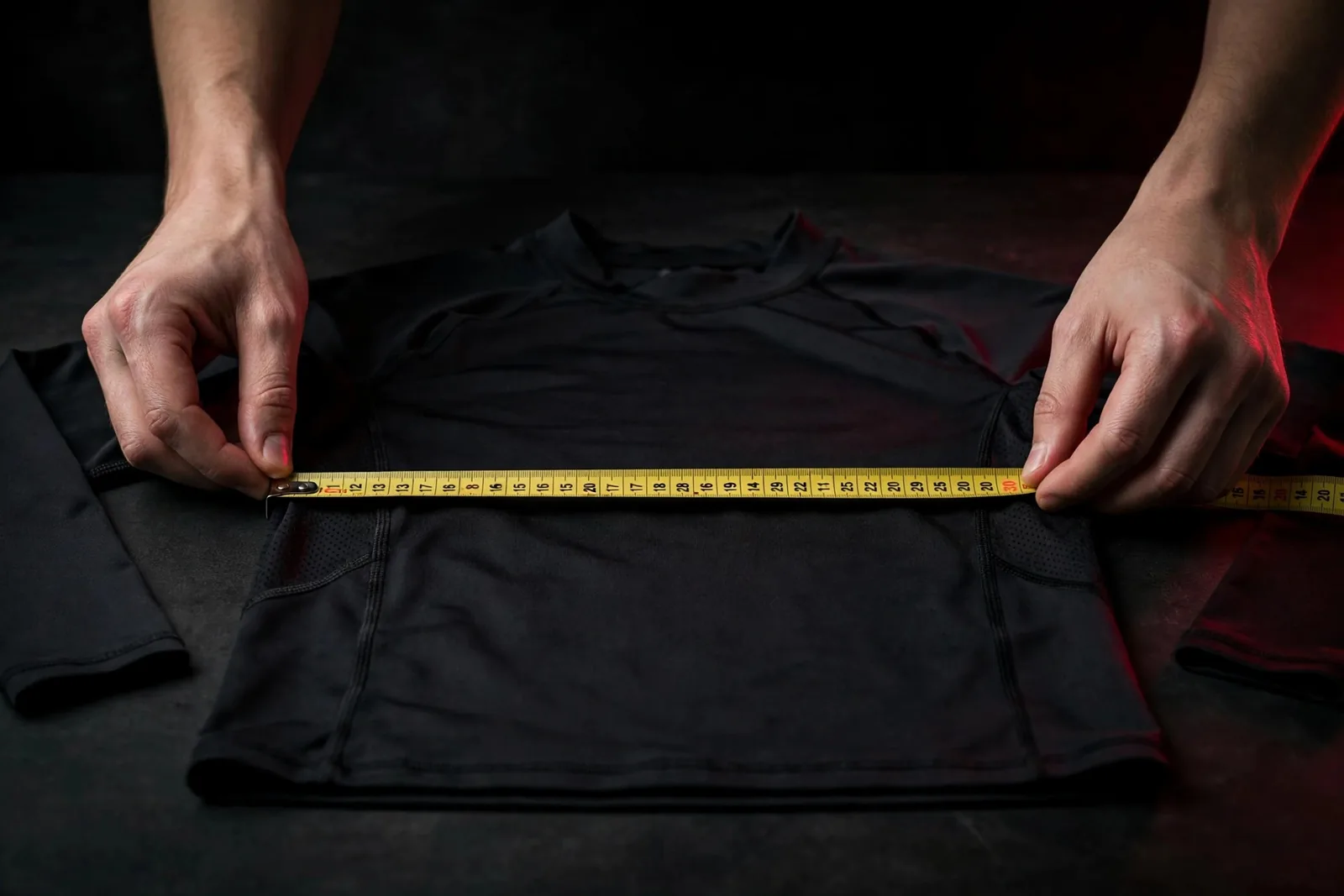
The last stage verifies polybag sealing, barcode and label accuracy, carton counts and size assortment against the packing list. Mixed sizes or wrong labels create expensive problems at the buyer’s warehouse, so this check is treated as part of quality, not administration.
Carton strength and moisture protection matter for sea freight, so buyers reviewing a supplier’s production capabilities should ask how goods are protected for the journey, not just how they are made.
How Brands Can Set Their Own QC Standards
Buyers get the most from QC by approving a golden sample, documenting acceptable tolerances and agreeing inspection points before production starts. Photographic standards for stitching, logo placement and finishing remove most ambiguity between brand and factory.
Clear standards protect both sides: the brand receives consistent goods, and the factory knows exactly what will be checked. This shared reference is the foundation of every long-term sourcing relationship.
Conclusion
Fight gear quality control works because it is layered: materials are verified before cutting, stitching is monitored during sewing and finished batches are sampled against agreed defect limits. No single inspection can replace that chain.
Brands can discuss their inspection requirements and product specifications with FORM FIGHT through the quote request page.
FAQs
What is checked first in fight gear quality control?
Incoming materials are inspected first, including leather and fabric quality, foam density, colour consistency and the strength of straps, zips and closures.
Why does stitch density matter on gloves and pads?
Correct stitch density keeps seams strong under impact; too few stitches let seams open, while too many can perforate and weaken the material itself.
What is a golden sample?
A golden sample is the buyer-approved reference unit that defines the exact materials, construction, colours and branding every production piece must match.
How are defects classified during final inspection?
Defects are grouped as critical, major or minor; critical safety defects fail a batch, while major and minor defects are counted against agreed limits.