Custom fight gear manufacturing turns a brand’s idea — a sketch, a reference garment or a full collection plan — into finished stock ready for fighters and customers. The journey from design brief to bulk production follows a sequence of well-defined stages, and understanding each one helps buyers communicate clearly, avoid delays and get exactly the product they approved.
It Starts With a Design Brief
The brief is the foundation: what the product is, who it is for, which fabrics and colours are intended, and what branding it carries. Reference images, competitor examples and even hand sketches all help a factory understand the target.
A clear brief saves more time than any other step. Vague instructions produce samples that miss the mark, while specific briefs let the factory quote, source and sample with confidence from the first attempt.
Building the Tech Pack
The tech pack converts the brief into a technical document: flat drawings, measurements for every size, fabric and trim specifications, stitch details, print placements and labelling requirements. It is the single reference both sides work from.
Experienced brands maintain tech packs for every style. If a buyer does not have one, factories can help develop it from a reference garment — a process sometimes called reverse engineering — before sampling begins.
Material and Trim Sourcing
With specifications set, fabrics, elastics, drawcords, zips, labels and packaging are sourced to match the tech pack. Colour lab dips may be produced so the buyer can approve exact shades under standard lighting before fabric is committed.
Material choices drive both quality and cost, so this stage includes honest discussion of alternatives — a slightly different fabric weight or trim can change the feel, the durability and the final price of the product.
Pattern Making and Grading
Pattern makers translate the design into templates for each panel of the garment. The first pattern is made in a base size, tested through sampling, and only then graded — scaled up and down — into the full size range.
Grading is skilled work: proportions must change intelligently between sizes so a small and an extra-large fit their wearers equally well. Poor grading is a common cause of inconsistent fit across a size run.
The First Sample
The first sample — often called a proto sample — proves the concept in physical form. It may use substitute fabric if the final material is still being sourced, but its construction and proportions should already be close.
Buyers should examine the sample critically:
- Does the fit match the measurements in the tech pack?
- Are seams, stitching and finishing clean and consistent?
- Do prints and embroidery sit in the correct positions?
- Does the garment move well when worn and stretched?
- Do colours match the approved references?
Fit Sessions and Revisions
Sample comments are documented — measurements to adjust, seams to move, artwork to resize — and a revised sample is produced. One or two revision rounds are normal even for experienced teams; each round narrows the gap between sample and intention.
At FORM FIGHT in Sialkot, revision comments are tracked against the tech pack so nothing is lost between rounds, and the updated document becomes the permanent record of the approved style.
Pre-Production Sample and Approval
The pre-production sample (PPS) is made with the actual bulk fabrics, trims and branding, exactly as production will run. It is the final checkpoint: when the buyer approves the PPS, they are approving what the bulk order will look like.
A signed-off PPS and tech pack are kept as golden references. Any later dispute about colour, fit or construction is settled by comparing production against these agreed standards.
Bulk Cutting and Sewing
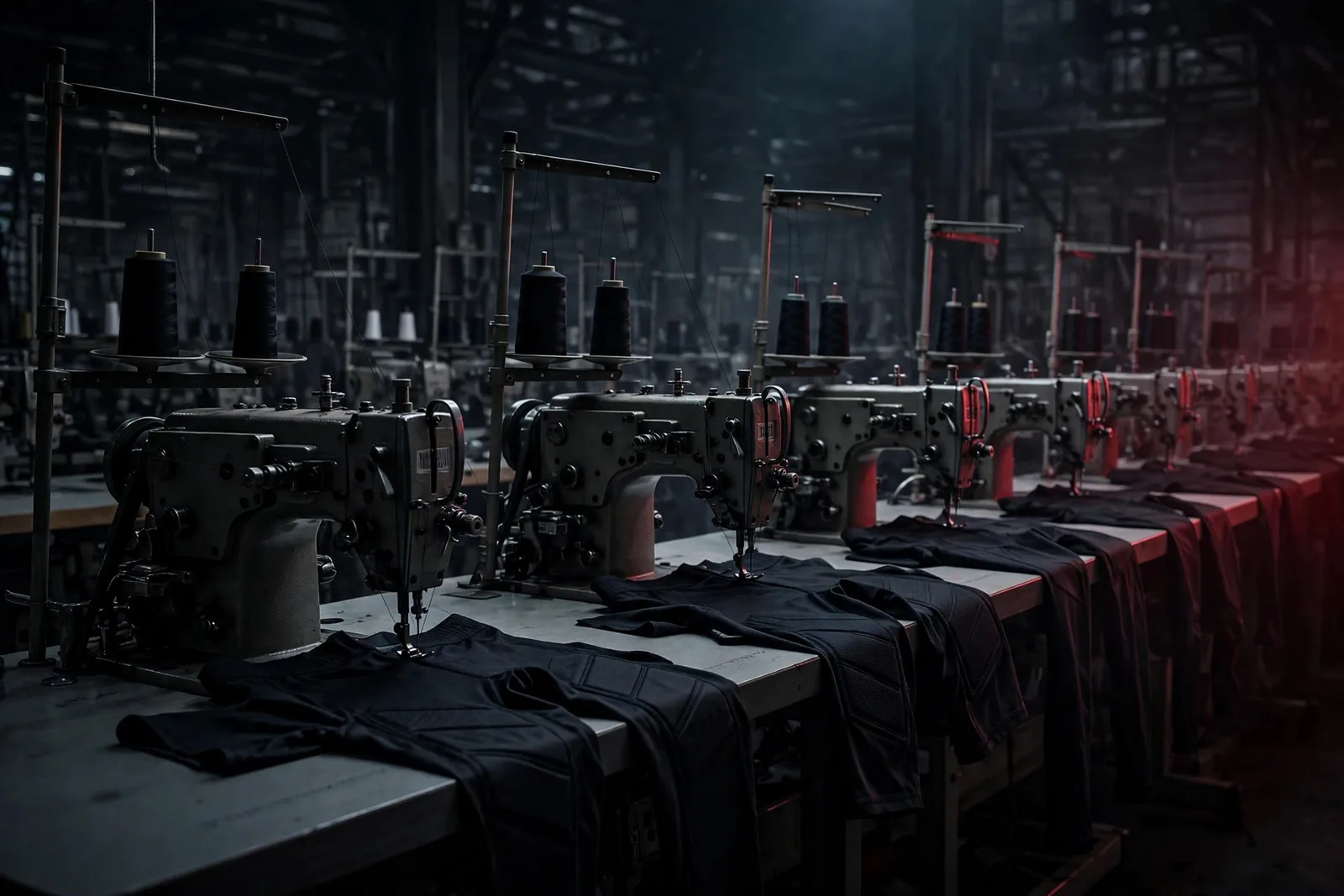
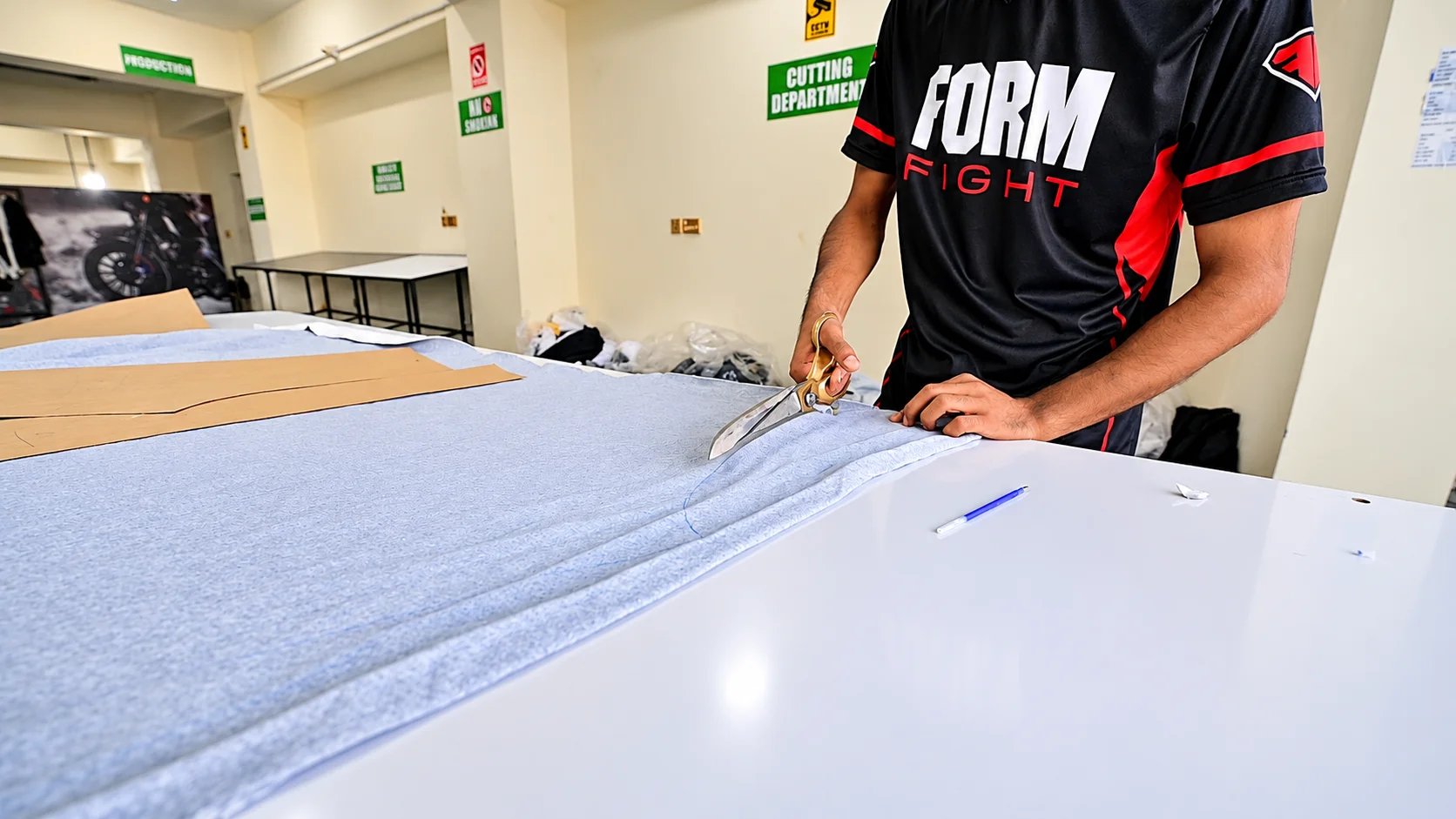
Production begins with fabric inspection, then cutting — panels are cut in layered stacks using the approved patterns, bundled by size and colour, and passed to sewing lines organised by operation.
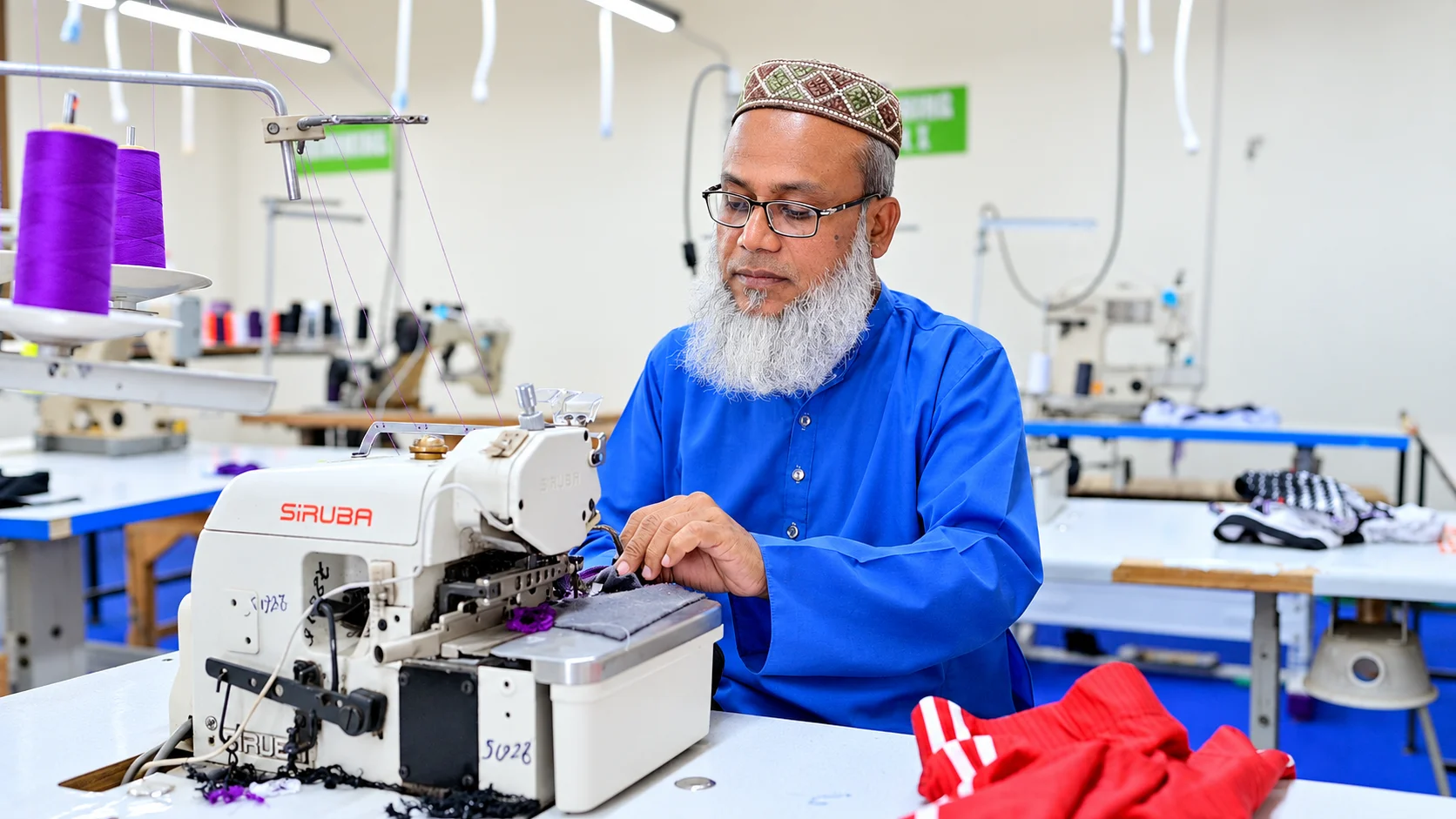
Skilled machinists assemble the garments stage by stage: joining panels, attaching elastic and trims, adding labels, and finishing hems. Work flows from station to station so each operator specialises, improving both speed and consistency.
Printing, Embroidery and Branding
Depending on the design, branding is applied at the correct point in the sequence — sublimation printing happens on panels before sewing, embroidery may be done on cut pieces or finished garments, and screen printing is usually applied to assembled products.
Sequencing matters: the wrong order can distort prints or make embroidery placement impossible. This is planned in the tech pack long before production starts, as part of the overall manufacturing process.
Quality Control During Production
Quality is checked at several points rather than only at the end: fabric inspection on arrival, inline checks during sewing, and final inspection of finished garments for measurements, stitching, prints and cleanliness.
Defects caught inline cost little to correct; defects found after packing cost far more. Systematic inspection at each stage is what keeps a bulk order uniform from the first carton to the last.
Packing, Labelling and Dispatch
Finished garments are trimmed of loose threads, folded, and packed — usually individually in polybags with size stickers, care labels and brand tags as specified. Cartons are marked with style, size breakdown and destination details.
Accurate packing lists let the buyer receive and check stock quickly on arrival. Careful packing also protects the product: compressed, damp or poorly folded garments create work at the other end of the journey.
Conclusion
Custom fight gear manufacturing is a chain of connected stages — brief, tech pack, sourcing, patterns, sampling, approval, production, quality control and packing — and the strength of the final product depends on every link. Buyers who invest effort in the early stages are rewarded with smooth production and consistent stock.
Brands ready to develop their own range can explore FORM FIGHT’s custom manufacturing capabilities and start the conversation through the request a quote page.
FAQs
What does a factory need from me to start?
A design brief with product details, reference images or a sample garment, fabric and colour preferences, sizes and branding artwork is enough to begin.
What is a tech pack and why does it matter?
A tech pack is the technical specification document for a product, covering measurements, materials, construction and branding so both sides build to the same standard.
How many sample rounds are normal?
One or two revision rounds after the first sample are typical, followed by a pre-production sample that must be approved before bulk production.
Can one order include several product types?
Yes — brands commonly develop fightwear, uniforms and accessories together, with each style following its own tech pack and sampling track within the order.